Range & Stove Repair in Walnut Creek, CA
We repair freestanding, slide-in and professional ranges on gas, dual fuel and induction, including 36-, 48- and 60-inch professional units with griddles, French tops and charbroilers.
- Burners that will not light, uneven simmer and oven faults
- $99 service call — repair price quoted on site
- Same-day appointments, Monday to Friday
Service call $99. Repair price quoted on site.
Range & Stove Problems We Fix
A range is two appliances in one enclosure, and the complaint usually belongs clearly to the cooktop side or the oven side. Professional ranges add a third category: the heavy hardware — doors, hinges, griddle plates — that a domestic range does not have.
One burner will not light but the others do
On a sealed-burner range that points at the igniter electrode for that burner, its lead, or a blocked burner port. If the electrode sparks and gas does not arrive, the valve or the orifice is the next stop. A single dead burner is rarely the spark module.
All burners click but none light
Now it is the spark module, the supply, or gas pressure. We confirm the module is firing on all channels and check the supply pressure at the appliance before touching individual burners, because a low-pressure supply mimics a module fault exactly.
Burners keep clicking after they light
Moisture or spill residue bridging the electrode to the burner cap, a cracked electrode ceramic, or a spark module that will not see the flame established. Cleaning around the electrode resolves a good share of these at no parts cost.
Simmer setting runs too hot
A burner valve that has lost its low-flame adjustment, or an orifice sized for the wrong gas. Ranges converted between natural gas and propane and never properly re-adjusted are a common source, and it shows up first as a simmer that scorches.
Yellow or lifting flames
Air-to-gas ratio. Blocked burner ports, a misseated burner cap, or the wrong orifice after a fuel conversion. Worth taking seriously: an incompletely burning flame produces carbon monoxide as well as soot on your pans.
Induction zone drops out under load
Induction generators derate themselves when their cooling is restricted or a power module is failing, so a zone that works on low and quits on high is the signature. We check the fan and the filter path before condemning the generator board.
Induction zone not recognizing pans
Either the pan is not ferromagnetic enough, or the coil or its detection circuit has failed. We test with a known-good pan first, which settles it in seconds and costs nothing.
Oven side will not heat on a dual-fuel range
Dual-fuel ranges pair a gas cooktop with an electric oven, so the oven fault is an electric one: bake element, relay, temperature sensor or one leg of the 240-volt supply. The cooktop working normally tells you nothing about the oven circuit.
Oven temperature wrong on a professional range
Temperature sensor drift or a collapsed door seal. On heavy professional doors the hinges wear and the door sits proud, and the heat loss at the top of the door looks exactly like a calibration fault.
Griddle or charbroiler not reaching temperature
Its own thermostat or valve, separate from the surface burners. On griddle plates an uneven surface temperature is usually the plate itself rather than the control, and that is worth knowing before a part is ordered.
Range door will not stay shut
Hinges and springs, and on professional ranges they carry a great deal of weight. Once the door hangs low the latch no longer engages and the oven loses heat continuously.
Smell of gas at the range
Shut the appliance valve and call. If the smell is strong, leave and call PG&E first; they attend gas odor calls at no charge. We do not diagnose gas smells by phone.
How We Repair Your Range
Supply confirmed before components
Gas pressure at the appliance, or both legs of the 240-volt supply on dual-fuel and induction. A supply fault imitates half a dozen component failures, so it goes first.
Cooktop side burner by burner
Spark module channels, electrodes, valves, orifices and cap seating, tested individually. Flame quality is judged by eye and by behavior at the low setting, not only at full.
Oven side measured independently
Our own probe in the cavity against the display through a full preheat, then the sensor's resistance and the stored calibration offset.
Doors, hinges and seals
On professional ranges the door hardware is a genuine wear item and it changes oven behavior. Hinges, springs and seal compression are part of every oven diagnosis here.
Verified on both sides
Every burner lit and taken to simmer, the oven preheated and held at a set point. The 3-month parts and 30-day labor warranty starts then.
Range & Stove Parts We Replace
Range work divides between the cooktop and oven circuits. Igniter and valve parts for common configurations travel on the van.
| Part | What it does, and how it fails |
|---|---|
| Spark module | Fires all electrodes. A genuine module fault kills every burner at once. |
| Igniter electrodes and leads | Crack or foul with spills; a single dead burner usually starts here. |
| Burner valves | Lose the low-flame setting, so simmer runs hot. |
| Burner orifices | Sized for natural gas or propane. Wrong size after a conversion gives yellow flames. |
| Oven igniter | Gas ovens. Weakens until it no longer opens the safety valve. |
| Gas safety valve | Opens only at the igniter's rated current draw. |
| Bake and broil elements | Dual-fuel and electric ovens. Fail open or short to the liner. |
| Temperature sensor | Drifts, and the oven runs hot or cold with a plausible display. |
| Induction coil | Fails to detect or to heat a pan on one zone. |
| Induction generator board | Derates and drops out under load, often a cooling problem first. |
| Convection fan motor | Stops, and baking goes uneven across the cavity. |
| Door hinges and springs | Heavy professional doors wear these out; the door then sits proud. |
| Door seal | Collapses with age and the oven loses heat at the top of the door. |
| Control board | Ordered per model, fitted after the circuit it drives has been cleared. |
We fit manufacturer parts on professional ranges as a rule. Burner orifices are the clearest reason: they are gas-specific and dimensionally exact, and an approximate part gives an incompletely burning flame, which is a combustion problem rather than an inconvenience. Where a board, a griddle plate or a door assembly has to be ordered, the technician confirms availability from your kitchen and the date is part of the quote.
Range & Stove Brands We Service
Professional ranges are the larger share of this work locally. Each brand page covers that manufacturer's burner design, fault codes and service access.
Luxury and Built-In
Range & Stove Repair Cost in Walnut Creek
The service call is $99, and it covers the trip and the diagnosis at your address. Beyond that we do not publish price ranges. The reason is worth stating plainly: a burner that will not light is a cleaned electrode on one range, a valve on the next, and a low supply pressure on the third — and on a 48-inch professional unit the oven and the cooktop are effectively two separate repairs. A number quoted before anyone has seen the appliance would be a guess, and a guess that later moves is worse than no number at all.
Once the technician has found the fault you get one price for the whole job — parts and labor together, with the 3-month parts and 30-day labor warranty included — and nothing proceeds until you agree to it. If you decide against the repair, you pay the service call and nothing else.
What moves the price on this appliance
- Gas, dual fuel or induction. Induction adds generator and coil assemblies that no gas range has; dual fuel means the oven fault is an electric one.
- Domestic or professional. A 48- or 60-inch professional range has heavier hardware, more burners and, often, a griddle or charbroiler with its own controls.
- Whether the appliance has to come out. Slide-in and professional ranges in a tight surround need pulling forward before the back or the base can be reached.
- Whether a fuel conversion is involved. A range converted between natural gas and propane without full re-adjustment needs that corrected before anything else will read true.
- Whether the part is carried. Electrodes, igniters, sensors, seals and common valves are on the van; boards, generator modules and griddle plates are ordered.
When we will tell you not to repair it
When the oven cavity liner has burnt through, when a professional door assembly is no longer supplied for the model, or when a generator board and two coils have failed together on an induction range already past its tenth year. We give you that answer on site, and you pay the service call rather than a doubtful repair.
Should You Repair or Replace Your Range?
The NAHB and Bank of America life expectancy study, published in 2007 on 2005 data, puts gas ranges at 15 years and electric ranges at 13 for a first owner — gas ranges being the longest-lived major appliance in that table. We quote it with its date rather than as a current figure.
The working rule is the 50% rule: if the repair costs more than half the price of an equivalent new unit, and the appliance is already past the middle of its service life, replacement is usually the better spend. Two things bend that rule on this appliance. First, professional ranges are built around serviceable mechanical parts, and a valve, an electrode or a hinge set on a fifteen-year-old unit is usually a sound spend. Second, a professional range sits in a purpose-built surround with matched ventilation, so replacement is a kitchen project rather than an appliance purchase.
Signs that point to replacement
- An oven cavity liner burnt or rusted through.
- A door or door-glass assembly the manufacturer no longer supplies for the model.
- An induction generator board plus multiple coils failing together late in life.
- A cooktop deck corroded through around the burner wells, which cannot be sealed.
Range & Stove Repair Near You in Walnut Creek and The East Bay
Professional ranges cluster in the remodeled kitchens and larger properties, which locally means the hillside homes and the newer builds more than the original tract stock.
Contra Costa County
Alamo, Lafayette, Orinda, Pleasant Hill, Concord and San Ramon sit on the same weekday routes. Beyond Contra Costa we cover Alameda, Santa Clara, San Mateo, San Francisco and Marin counties from the same base.
Range & Stove Repair Reviews
We do not publish written testimonials we cannot attribute. Our Google profile is the record, and the facts beside it are ones you can check.
What every call comes with
- $99 service call, covering the trip and the diagnosis. The repair price is quoted on site and you approve it before any work begins.
- 3-month parts and 30-day labor warranty on what we install, alongside the manufacturer’s own part warranty.
- Independent workshop, working since 2017. We are not an authorized agent for any manufacturer, and we do not claim to be.
- A Walnut Creek base at 130 Sharene Lane, so the common parts are already on the van and most jobs close in one visit.
How to Keep Your Range Running Longer
Ranges reward a little attention to combustion and to the door. Both are things you can check yourself in a couple of minutes.
Look at the flame color
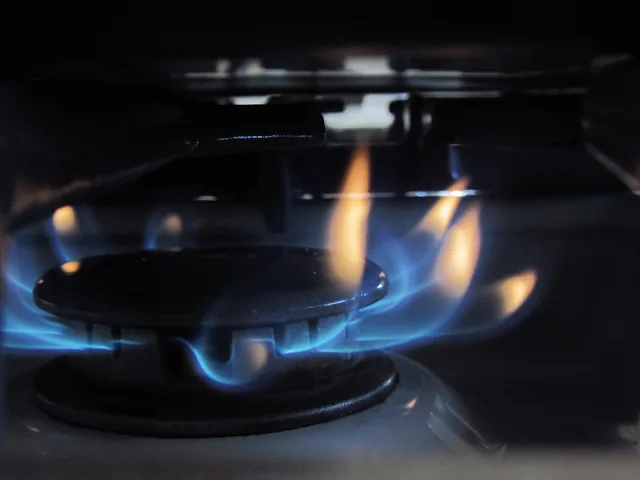
A correctly burning natural-gas flame is blue with a small, sharply defined inner cone. Yellow tips, lifting flames or soot on the bottom of your pans mean the air-to-gas ratio is wrong, and that produces carbon monoxide as well as mess. Worth a call rather than a wait.
Seat the burner caps properly after cleaning
A cap sitting a millimeter off its locating pins distorts the flame pattern and is the single most common cause of a burner that suddenly burns yellow or clicks after it lights. Free to fix, and easy to get wrong when the caps go back in a hurry.
Keep spills off the electrodes
The spark electrode beside each burner is ceramic with a fine tip, and boiled-over liquid bakes onto it. Once residue bridges the gap the burner clicks without lighting, or keeps clicking after it lights. Wipe around them when the cooktop is cool.
Check the oven door seal once a year
Shut the door on a strip of paper at several points. If it slides out freely anywhere, the seal has flattened or the hinges have dropped. On a heavy professional door that heat loss shows up as an oven that seems out of calibration when nothing is wrong with the sensor.
Do not let an induction range breathe through a blocked path
Induction generators are cooled by a fan drawing air through a grille, usually underneath or at the rear. Blocked by a drawer liner or by dust and the electronics derate themselves, which is exactly the zone-drops-out-on-high complaint. Keep the intake clear.
For running costs and efficiency, the federal guidance at energy.gov is the neutral source.
Range & Stove Repair FAQ
One burner will not light and the rest are fine. What is it?
With one burner out, the spark module is almost never the answer, because a failed module takes all of them down together. It is usually the electrode for that burner, its lead, a blocked burner port, or the valve. Spill residue bridging the electrode is common and costs nothing to correct.
My simmer setting scorches everything. Can that be adjusted?
Yes. Either the burner valve has lost its low-flame adjustment, which is set at the valve itself, or the orifice is sized for the wrong gas. Ranges converted between natural gas and propane and never fully re-adjusted give exactly this symptom, and the simmer setting is where it shows first.
Do you repair professional 48-inch and 60-inch ranges?
Yes, and it is a large share of the work. On a unit that size the oven and the cooktop are effectively two repairs, the door hardware is a genuine wear item, and a griddle or charbroiler has controls of its own. Tell us the width and the configuration when you book.
An induction zone works on low but cuts out on high. Is the board gone?
Not necessarily, and we check the cheaper cause first. Induction generators protect themselves by derating when their cooling airflow is restricted, so a blocked intake grille or a failing fan produces this precisely. If the airflow is fine, then a power module in the generator is the next suspect.
The oven on my dual-fuel range will not heat but the burners work. Why?
Because on a dual-fuel range the oven is electric and the cooktop is gas, so they share almost nothing. The working burners tell you nothing about the oven circuit. We look at the bake element, the control relay, the temperature sensor and both legs of the 240-volt supply.
What should I do if I can smell gas at the range?
Shut the appliance valve if you can reach it safely, and call us. If the smell is strong, leave the house and call PG&E first — they attend gas odor calls at no charge, and that is the correct first step. We will not try to diagnose a gas smell over the phone.
Is a fifteen-year-old professional range worth repairing?
Usually, yes. They are built around mechanical parts that can be replaced individually — valves, electrodes, hinges, seals — and a range that age with a valve fault is a sound spend. What changes the answer is a cavity liner burnt through, a cooktop deck corroded around the burner wells, or a door assembly the manufacturer no longer supplies.