(925) 592-3474 Mon–Fri 8 AM – 8 PM Same-Day Service Available contact@myappliancerepairman.com ★ 4.8 on Google

Washing Machine Repair Walnut Creek

We repair front-load, top-load and stacked washing machines, including units installed in upstairs laundry closets.

  • Same-Day Appointments, Monday to Friday
  • OEM Parts
  • 3-month parts and 30-day labor warranty

Service call $99. Repair price quoted on site.

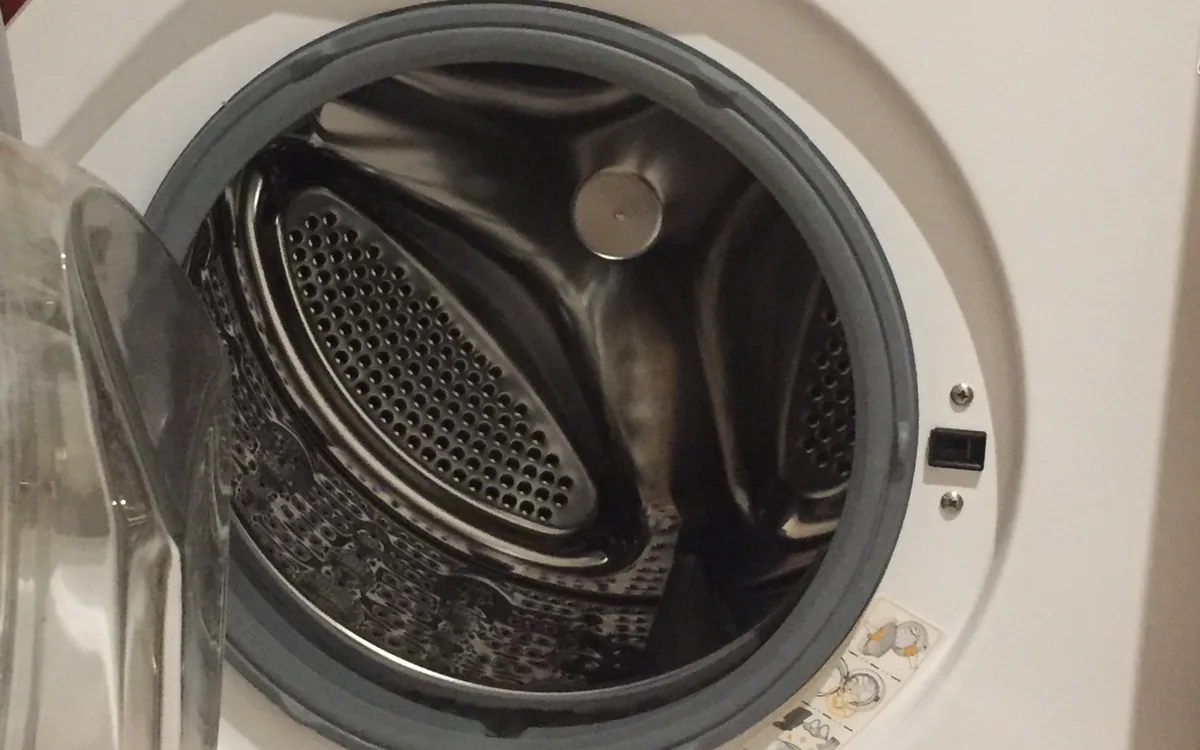
Open drum of a front-load washing machine with the door seal visible
★ 4.8 on GoogleRead our profile
Independent workshopWalnut Creek, since 2017
3-month parts warranty30-day labor warranty
Same-day serviceMonday to Friday, 8 AM to 8 PM

Major Problems You Face with Washing Machines

Twelve faults in the words customers use, with the components we check for each.

Washer Won’t Drain

Water sitting in the drum after the cycle ends. The drain pump is the usual culprit, but a sock or a coin lodged in the pump housing produces exactly the same symptom and costs nothing to remove.

We check: drain pump, drain hose, coin trap, pressure switch, house drain

Washer Won’t Spin

The machine fills and drains but never spins up. On front-load units the door lock assembly is first on the list, because the control will not allow a spin without a confirmed lock signal.

We check: door lock assembly, lid switch, drive belt, motor coupler, clutch, control board

Washer Won’t Start

Lights come on but nothing happens, or nothing comes on at all. We verify supply at the outlet before condemning a board, and check the door lock, which reports open even when it feels shut.

We check: door lock, power supply, main control board, thermal fuse, start switch

Washer Leaking Water from the Bottom

On front-load machines the door boot seal is the most common source, and the leak appears at the front of the base. Pump housings and tub-to-pump hoses leak at the rear. In upstairs installations we find the source before it reaches the ceiling below.

We check: door boot seal, tub-to-pump hose, pump housing, tub seal, dispenser hose

Washer Shaking and Banging During the Spin Cycle

Worn shock absorbers let the tub travel far enough to strike the cabinet. If the noise is a deep rumble that rises with speed rather than a bang, the tub bearing is going — a much bigger job.

We check: shock absorbers, suspension rods, counterweight bolts, tub bearing, leveling

Washer Won’t Fill with Water

We measure flow at the inlet valve first. Blocked inlet screens are common in older installations, and a closed or partially seized house shut-off accounts for more calls than people expect.

We check: water inlet valve, inlet screens, pressure switch, water level sensor, house shut-off

Washer Door Won’t Unlock

A front-load door stays locked while the control believes there is water in the tub, so a drain fault presents as a door fault. We drain the machine, then test the lock assembly itself.

We check: door lock assembly, drain circuit, control board

Washer Stops Mid-Cycle

The cycle halts at the same stage every time, which tells us where to look. Stopping at drain points at the pump; stopping at heat points at the thermistor; stopping at random points suggests the control board.

We check: main control board, motor control board, thermistor, drain pump, door lock

Front-Load Washer Smells Like Mildew

Detergent residue and standing water collect behind the door boot seal and in the pump filter. Both grow bacteria, and both are cleaned as part of the visit rather than treated with an additive.

We check: door boot seal, drain pump filter, tub deposits, drain hose

Washer Not Dispensing Detergent

Softener or detergent left sitting in the drawer after the cycle. Usually a blocked dispenser cup or a failed dispenser valve, occasionally low water pressure at the inlet.

We check: dispenser assembly, dispenser valve, water pressure, dispenser cup

Washer Drum Not Turning

Motor runs, drum does not. On belt-driven machines the belt has usually shredded; on direct-drive top-loaders the motor coupler fails first, by design, to protect the transmission.

We check: drive belt, motor coupler, transmission or gearcase, drive motor, tub bearing

Washer Showing an Error Code

The code names a circuit, not a part. We read the stored fault, then confirm it against what the machine actually does on a test cycle before replacing anything.

We check: stored fault state, sensors, door lock, drain circuit

Specific error codes are brand-dependent and belong on the manufacturer pages, sourced from service documentation — not here.

How We Repair Your Washer

1

Cycle Test and Fault Reproduction

We run a short cycle to see which stage fails. Knowing whether the machine dies at fill, drain or spin removes most of the guesswork.

2

Water Intake and Drain Check

Supply pressure, inlet valve, inlet screens, pump, drain hose and the water level the control thinks it has.

3

Drive and Suspension Inspection

Belt, coupler, tub bearing, shock absorbers and suspension rods, plus whether the machine is actually level.

4

Electronics and Lock Diagnostics

Control board, door lock assembly, water level sensor and thermistor, read against the stored fault state.

5

Repair, Test Load and Warranty

After the part goes in we run a cycle with a load: vibration, imbalance and slow leaks only appear under weight. Then 3-month parts, 30-day labor.

Washer Parts We Replace

PartWhen it is the cause
Drain pumpWater left in the drum; cycle halts at the drain stage
Drain hoseLeak at the rear, or a blockage that mimics a failed pump
Water inlet valveWill not fill, or keeps filling with the machine off
Door lock assemblyWill not start, will not spin, or the door stays locked
Lid switch assemblySame failures on top-load machines
Door boot seal (bellows)Leak at the front of the base and persistent mildew smell
Shock absorbersBanging and cabinet contact during spin
Suspension rodsSame on top-load machines; tub swings and does not settle
Drive beltMotor runs, drum does not turn
Motor couplerDrum will not turn on direct-drive top-loaders; grinding noise
Transmission / gearcaseNo agitation, no spin, or no direction change
Tub bearing and sealDeep rumble on spin, leak from the center of the tub
Main control boardCycles behave erratically, machine stops at random points
Pressure switch / water level sensorOver- or under-filling; door stays locked with an empty tub
Dispenser assemblyDetergent or softener left in the drawer

We Service all Major Washing Machine Brands and Models

Only manufacturers that actually build washing machines. Sub-Zero, Wolf, Thermador, Viking and Gaggenau do not, so you will not find a “Thermador washer repair” link here — it would lead to a page that does not answer the query.

Luxury and Built-In

We also service Signature Kitchen Suite, Bosch, Asko, Samsung, LG, Whirlpool, Maytag, KitchenAid, GE, Electrolux, Speed Queen, Frigidaire, Amana, Kenmore, Haier, Hotpoint and Beko; they do not have a page of their own yet. Call (925) 592-3474 with the make and model and we will tell you straight away.

Washer Repair Cost in Walnut Creek

The service call is $99, covering the trip and the diagnosis. After that you get one flat price for parts and labor together, agreed before anything is opened up. We do not publish repair price ranges, because the spread on a washer is wide: the same “won’t spin” complaint can be a door lock or a bearing.

What moves the price

  1. Which component failed. A drain pump and a tub bearing differ several times over.
  2. Load type. Front-load machines come apart in a different order than top-loaders.
  3. Access. A closet installation, a stacked pair or a second-floor laundry adds working time before anything can be reached.
  4. Tub bearing replacement. On many models the bearing is not serviceable separately and comes as an assembly with the outer tub.
  5. Manufacturer part versus a compatible equivalent.
  6. Whether the part is on the truck or ordered for your model.

Point four is the one worth reading twice: a tub bearing job on a mid-range machine can approach half the price of a replacement, and that is the most common case where we advise against the repair. Saying so on this page means fewer visits that end in a declined quote.

What the symptom usually turns out to be

The last column decides whether you are looking at one visit or two: parts we carry go in the same day.

SymptomWhat we usually replaceCarried on the van
Won’t drainDrain pump, or a blocked filter and hoseYes
Won’t spinDoor lock, belt or motor couplerYes
Leaking from the bottomDoor boot seal or pump housingPer model
Won’t fillWater inlet valveYes
Loud on spinShock absorbers, or the tub bearingAbsorbers yes, bearing no
Stops mid-cycleMain control boardNo, ordered per model

Should You Repair or Replace Your Washer?

As a benchmark, the National Association of Home Builders Study of Life Expectancy of Home Components (February 2007) puts a washing machine at 10 years, against 13 for a dryer — the shortest life of any major laundry appliance in that table. The study is dated and its source data is from 2005, so read it as a reference point, not an expiry date. It does match what we see: laundry pairs rarely fail together, and the washer almost always goes first.

Washing machines are the appliance where replacement wins most often, so this section is worth more attention than the usual 50% rule. The rule still holds — if the repair costs more than half a comparable new machine and the unit is near the end of its service life, replace it — but the interesting cases are the ones that sit near the line.

Four signs replacement is the right choice

  1. A worn tub bearing on a model where the bearing is only available as an assembly with the outer tub.
  2. Control board failure on a machine past its expected service life.
  3. A second failure of a different component within twelve months.
  4. A discontinued part with no compatible equivalent.

Front-load machines follow a sequence

Front-load failures tend to arrive in a known order: the door boot seal degrades first, water works past it, and the tub bearing goes next. Replacing the boot seal while it is only weeping is inexpensive and buys years. Calling once there is a rumble on the spin cycle means the bearing is already involved, and the economics change completely. If your machine smells and the seal looks tired, that is the cheap moment to act.

We also repair dryers and washer-dryer combo units, which are usually part of the same conversation.

Same Day Appliance Repair Service Near Me in Walnut Creek

Multi-unit buildings and shared laundry rooms put machines under far heavier duty than a single household does, and that shows up in which parts fail first — bearings, shock absorbers and pumps rather than boards.

Zip Codes We Serve in Walnut Creek

  • 94595
  • 94596
  • 94597
  • 94598

Santa Clara County

  • San Jose
  • Palo Alto
  • Sunnyvale
  • Santa Clara

Alameda County

  • Oakland
  • Fremont
  • Berkeley

San Mateo & San Francisco counties

  • San Mateo
  • San Francisco

Also Mountain View, Redwood City, Hayward, Cupertino, Milpitas, Alameda, Pleasanton, Daly City, San Rafael, Union City, Concord and Livermore.

Washer Repairs We Handle

Washing machine with the front panel removed, exposing the drum and pump
Walnut Creek94597Same day

LG WM4000HWA front-load washer

“It shakes so hard on spin the whole floor moves.”

Two shock absorbers were spent and the drum bearing had play. Shocks replaced as a pair, bearing and seal kit fitted, and the machine leveled on its feet. Test spin at full speed with a balanced load ran without the walk that brought us out.

Digital multimeter used to test a washer control circuit
Berkeley94703Same day

LG WM4000HWA front-load washer

“It shakes so hard on spin the whole floor moves.”

Drive belt had glazed and was slipping under load. Belt replaced, transmission checked for play, and the drive pulley cleaned. Full wash cycle run on site with a weighted load to confirm the agitation stroke was back to normal.

Socket set used to release a washer from a laundry closet
Danville94526Next day — part ordered

LG WM4000HWA front-load washer

“It shakes so hard on spin the whole floor moves.”

Door boot seal had split at the lower fold where it collects debris. Boot replaced with the correct part for the model, clamp seated properly and drain holes cleared. Two cycles run at the machine's highest fill to confirm the seal was dry.

Washer Repair Reviews

4.8

Our rating on Google

Read the reviews on Google

What every call comes with

  • $99 service call, covering the trip and the diagnosis. The repair price is quoted on site and you approve it before any work begins.
  • 3-month parts and 30-day labor warranty on what we install, alongside the manufacturer’s own part warranty.
  • Independent workshop, working since 2017. We are not an authorized agent for any manufacturer, and we do not claim to be.
  • A Walnut Creek base at 130 Sharene Lane, so the common parts are already on the van and most jobs close in one visit.

How to Keep Your Washer Running Longer

Use the HE dose, not a capful

High-efficiency machines use a fraction of the water older ones did, so a normal dose of detergent never fully rinses away. The residue is what feeds the smell and coats the tub.

Dry the seal and leave the door open

Wipe the door boot seal after the last load and leave the door ajar. Standing water in the fold of the bellows is the single cause of most front-load odor complaints.

Clean the pump filter

Front-load machines have an accessible filter behind a panel at the base. Clearing it every few months prevents the “won’t drain” call entirely.

Do not overload

Running consistently over the rated capacity is what wears bearings and shock absorbers years early. A machine that walks across the floor is telling you the load is too heavy or badly distributed.

Level the machine

Check the feet with a spirit level and tighten the lock nuts. An out-of-level washer amplifies every imbalance and transfers it into the suspension.

Replace the fill hoses

Rubber fill hoses have a service life, and a burst hose is the most expensive failure a washer can cause — especially upstairs. Replace them on schedule and close the valves if you are away for a long stretch.

On efficiency and running costs: energy.gov.

Washer Repair FAQ

How much does washer repair cost?

The service call is $99, covering the trip and the diagnosis. Beyond that we do not publish price ranges, because the spread on a washer is wide: the same “won’t spin” complaint can be a door lock or a bearing. After the diagnosis you get one flat price for parts and labor together, agreed before anything is opened up. The shape of it is predictable, though: drain pumps, door locks and inlet valves are the cheap end, and a tub bearing is the expensive end, because on many models the bearing comes as an assembly with the outer tub.

Is it worth repairing a washer that won’t spin?

Almost always, yes. A washer that fills and drains but will not spin usually needs a door lock assembly, a drive belt or a motor coupler — parts that cost a fraction of a new machine. The exception is a worn tub bearing, where the repair can approach half the price of a replacement on mid-range models.

How long does a washer repair take?

Most jobs are done in one visit, typically 60 to 90 minutes on site. Stacked units and washers installed in a closet take longer because the machine has to be pulled out first. Tub bearing replacement is a half-day job. If a part must be ordered, we quote the work and return once it arrives.

Do you repair front-load, top-load and stacked washers?

Yes, all three, plus washer-dryer combo units. Front-load machines bring their own pattern of faults — door boot seals, drain pump filters and tub bearings. Top-load machines more often need lid switches, suspension rods and transmissions. Stacked units require separating the dryer first, which we do as part of the job.

Why does my front-load washing machine smell?

Detergent residue and trapped water build up behind the door boot seal and in the drain pump filter, and both grow bacteria. We clean the seal and the filter as part of the repair and show you where they are. Using the HE dose rather than a full cap of detergent prevents most of it coming back.

How long should a washing machine last?

The NAHB Study of Life Expectancy of Home Components (2007) gives 10 years for a washer, the shortest of the major laundry appliances, against 13 for a dryer. The figure is measured for first-owner use and the data behind it is from 2005, so treat it as a benchmark rather than a deadline. Load size matters more than brand: a machine run consistently over its rated capacity wears its bearings and shock absorbers years early. Commercial-grade top-load machines generally outlast feature-heavy front-load models.

Can you repair a washer in an upstairs laundry closet?

Yes. Closet and second-floor installations are common here, and they change the job: the machine must be pulled forward before anything can be reached, and any leak has to be found before it reaches the ceiling below. Tell us the location when you book so the technician allows the time.

Do I need to do anything before the technician arrives?

Clear a path to the machine and remove any laundry from the drum. If the washer is full of water and the door is locked, leave it — draining it is part of the diagnosis. Have the model number ready; it is on a label inside the door frame on front-load machines and under the lid on top-load machines.

Book a Washer Repair

(925) 592-3474

Mon–Fri, 8 AM to 8 PM · $99 service call, repair price quoted on site · 3-month parts and 30-day labor warranty

We also repair dryers and refrigerators, and we service Thermador kitchen appliances.

Call Now · (925) 592-3474