Oven Repair Walnut Creek
We repair built-in wall ovens, double ovens, steam and combination-steam ovens and speed ovens — including the flush-fitted installations that have to come out of the cabinetry before anything can be reached.
- No heat, wrong temperature and doors locked after self-clean
- $99 service call — repair price quoted on site
- Same-day appointments, Monday to Friday
Service call $99. Repair price quoted on site.
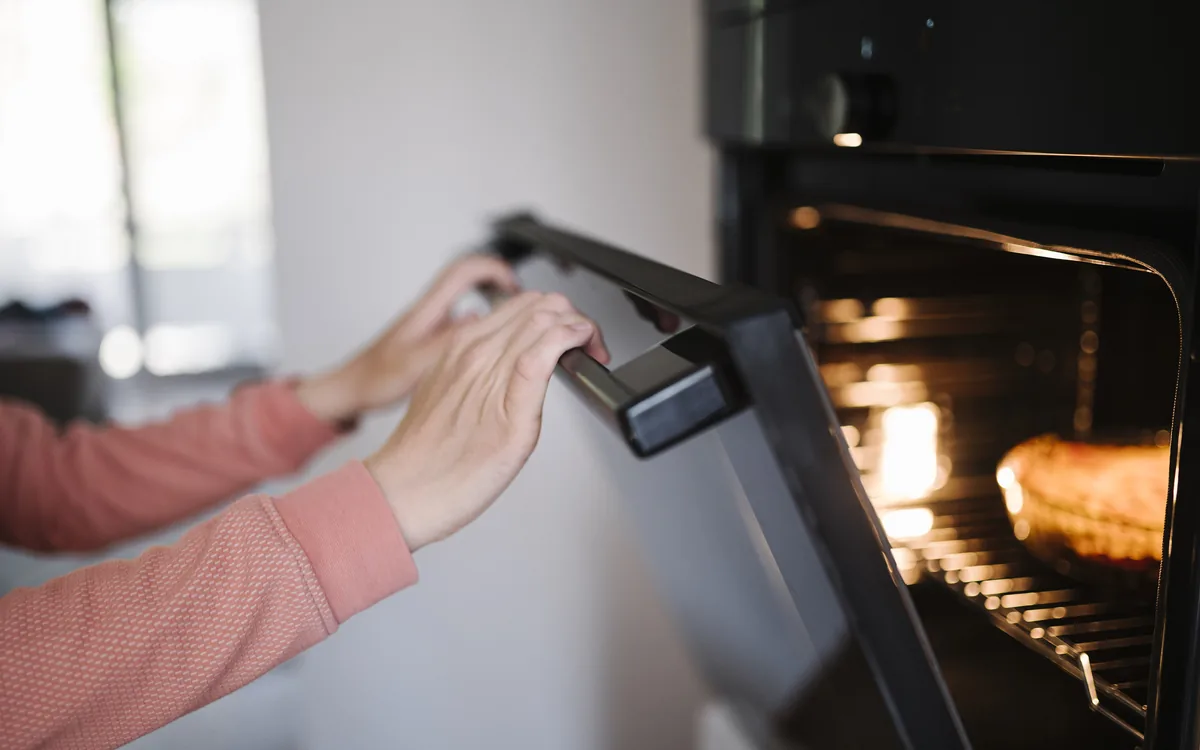
Major Problems You Face with Ovens
An oven is a heating circuit, a sensing circuit and a door, and nearly every complaint belongs to one of the three. The self-clean cycle deserves its own mention, because it is behind a surprising share of the calls we attend.
Oven will not heat at all
Electric ovens: the bake element, the relay on the control board, or one leg of the 240-volt supply. Gas ovens: the igniter, which weakens before it fails and then no longer draws enough current to open the safety valve. A weak igniter that still glows is the classic false lead here.
Oven heats but never reaches temperature
Usually the temperature sensor drifting, or a broil element doing the work of a failed bake element. We compare the sensor's resistance against its specification at a known temperature rather than trusting the display, then check calibration offset before replacing anything.
Food burns on top and stays raw underneath
Points to the bake element or its relay, with the broil element compensating. On convection models it can also be a failed convection fan motor, which leaves the oven heating by radiation alone and baking as unevenly as an old oven.
Door locked after a self-clean cycle
Common, and usually the door lock motor or its switch rather than anything serious. The cycle runs the cavity far hotter than baking does, and the heat is also what kills thermal fuses and, on some models, the control board during self-clean.
F-code or E-code on the display
Manufacturers log faults for the sensor circuit, a runaway temperature, the door lock and the touch panel. We read the code against that manufacturer's own documentation, because the same number means different things on different brands.
Oven turns itself off mid-bake
A thermal fuse or high-limit device opening, a cooling fan that has stopped so the cabinet overheats, or a control board with a failing relay. On built-in installations a blocked vent path in the cabinetry produces this and is not a fault in the oven at all.
Oven door will not close flush
Hinges, the door springs or a collapsed door seal. On heavy double ovens the hinges wear first, and a door sitting even slightly open loses enough heat to look like a heating fault on the display.
Touch panel unresponsive or keys ghosting
A failed membrane or the control board behind it. Heat from self-clean and from a blocked cabinet vent is the usual cause, so we check the vent path before fitting a new panel that would fail the same way.
Steam oven not generating steam
The water reservoir seating, the pump, the boiler element or a scaled-up boiler. On combination-steam models scale is the leading cause, and descaling on the manufacturer's interval is what prevents it.
Smell of gas around the oven
Stop using it, shut the supply off at the appliance valve, and call. We will not diagnose a gas smell over the phone. If the smell is strong, leave and call your utility first — PG&E attends gas odor calls free of charge.
How We Repair Your Oven
Temperature measured independently
We put our own probe in the cavity and compare it against the display through a full preheat. A display that lies is a different fault from an oven that genuinely will not heat.
Heating circuit tested under load
Elements measured for resistance and then watched drawing current; on gas, the igniter's current draw against the safety valve's opening threshold. A glowing igniter proves nothing on its own.
Sensor and calibration checked
The temperature sensor is ohmed at a known cavity temperature, and the stored calibration offset is read. Both have to be right before an element is condemned.
Door, lock and vent path
Hinges, springs, seal compression, lock motor and the cabinet vent route. On built-in ovens the cabinetry is part of the diagnosis as often as the appliance is.
Verified through a full preheat
After the repair we preheat to a set point, hold it, and confirm the cavity stays within tolerance. The 3-month parts and 30-day labor warranty starts then.
Oven Parts We Replace
Oven work concentrates in the heating and sensing circuits and in the door. The first group travels on the van.
| Part | What it does, and how it fails |
|---|---|
| Bake element | Fails open, or blisters and shorts to the cavity wall. |
| Broil element | Often still working when bake has failed, which masks the fault. |
| Igniter | Gas ovens. Weakens over years until it no longer opens the safety valve. |
| Gas safety valve | Opens only at the igniter's rated current. Replaced with the igniter where indicated. |
| Temperature sensor | An RTD probe. Drifts out of spec and the oven runs hot or cold. |
| Thermal fuse and high-limit | One-shot devices that open on overheat, commonly during self-clean. |
| Convection fan motor | Stops, and the oven bakes as unevenly as a conventional one. |
| Cooling fan | Protects the controls. When it stops, the touch panel fails next. |
| Door lock motor and switch | The usual reason a door stays locked after self-clean. |
| Door hinges and springs | Wear under heavy doors; the door then sits proud and loses heat. |
| Door seal | Collapses with age. Cheap, and it restores even baking. |
| Touch membrane and control board | Ordered per model. Fitted only after the vent path is confirmed clear. |
| Steam boiler element and pump | Steam models. Scale is the usual failure mode. |
On built-in ovens we fit manufacturer parts as a rule. Temperature sensors are the clearest case: an aftermarket probe with a slightly different resistance curve gives an oven that is consistently ten or fifteen degrees out, which is worse than the fault you started with because it is harder to notice. Where a board or a model-specific door assembly must be ordered, availability is checked before you agree to the work.
We Service all Major Ovens Brands and Models
Built-in and professional ovens are most of this work. Each brand page covers that manufacturer's fault codes, model lines and service access.
Luxury and Built-In
Oven Repair Cost in Walnut Creek
The service call is $99, and it covers the trip and the diagnosis at your address. Beyond that we do not publish price ranges. The reason is worth stating plainly: no heat is a $30 igniter on one gas oven and a control board plus a thermal fuse on the next, and on a flush-fitted built-in a third of the job is getting the unit out of the cabinetry before anyone can see which it is. A number quoted before anyone has seen the appliance would be a guess, and a guess that later moves is worse than no number at all.
Once the technician has found the fault you get one price for the whole job — parts and labor together, with the 3-month parts and 30-day labor warranty included — and nothing proceeds until you agree to it. If you decide against the repair, you pay the service call and nothing else.
What moves the price on this appliance
- Freestanding, slide-in or built-in. A flush-fitted wall oven has to be unfastened and drawn out of its enclosure, and on a double oven that is two people.
- Gas or electric. Gas adds the igniter, the safety valve and a gas-tightness check; electric adds the 240-volt supply and the element circuit.
- Whether self-clean was involved. Heat damage from a self-clean cycle often takes out a fuse, a lock motor and sometimes the board together.
- Whether the cabinet vent path is clear. If the enclosure is starving the oven of cooling air, fixing only the failed part guarantees a second call.
- Whether the part is carried. Elements, igniters, sensors, fuses, lock motors and hinge kits are on the van; boards and door glass are ordered.
When we will tell you not to repair it
When the cavity liner is burnt through, when a self-clean has damaged the board, the lock and the wiring harness together on an oven past its twelfth year, or when the door glass assembly for the model is no longer supplied. We say so on site, and you pay the service call rather than a repair with a poor outlook.
Should You Repair or Replace Your Oven?
The NAHB and Bank of America life expectancy study, published in 2007 on 2005 data, does not list wall ovens separately; it gives gas ranges 15 years and electric ranges 13. Those are the nearest published figures and we quote them as such, with their date, rather than inventing a number for built-in ovens.
The working rule is the 50% rule: if the repair costs more than half the price of an equivalent new unit, and the appliance is already past the middle of its service life, replacement is usually the better spend. Two things bend that rule on this appliance. First, a built-in oven has to fit an existing cabinet opening, and openings in kitchens remodeled fifteen or twenty years ago were often sized for models no longer produced — which turns replacement into cabinetry work. Second, the heating and sensing parts that fail most are inexpensive, so ovens are frequently worth repairing late in life.
Signs that point to replacement
- A cavity liner that has burnt or rusted through, which cannot be patched.
- Board, door lock and harness damaged together by a self-clean cycle on an older unit.
- Door glass or a door assembly that the manufacturer no longer supplies for the model.
- Repeated element failures with a cabinet vent path that cannot be corrected.
Same Day Oven Repair Service Near Me in Walnut Creek
Built-in wall ovens are concentrated in the remodeled kitchens and in the older communities where the original units are still in their original openings.
Contra Costa County
Alamo, Lafayette, Orinda, Pleasant Hill, Concord and San Ramon sit on the same weekday routes. Beyond Contra Costa we cover Alameda, Santa Clara, San Mateo, San Francisco and Marin counties from the same base.
Zip Codes We Serve in Walnut Creek
- 94595
- 94596
- 94597
- 94598
Oven Repair Reviews
We do not publish written testimonials we cannot attribute. Our Google profile is the record, and the facts beside it are ones you can check.
What every call comes with
- $99 service call, covering the trip and the diagnosis. The repair price is quoted on site and you approve it before any work begins.
- 3-month parts and 30-day labor warranty on what we install, alongside the manufacturer’s own part warranty.
- Independent workshop, working since 2017. We are not an authorized agent for any manufacturer, and we do not claim to be.
- A Walnut Creek base at 130 Sharene Lane, so the common parts are already on the van and most jobs close in one visit.
How to Keep Your Oven Running Longer
Most of what shortens an oven's life is heat with nowhere to go. These four habits address that directly.
Use self-clean sparingly
The cycle takes the cavity far above any cooking temperature, and that heat is what kills thermal fuses, door lock motors and control boards. Once or twice a year at most, and never the night before you need the oven. Wipe spills by hand while the cavity is still warm instead.
Keep the cabinet vents clear
A built-in oven vents through a gap at the top or bottom of its enclosure, and that gap is often blocked by a fitted trim piece, a drawer liner or stored baking trays. Starve it and the controls cook themselves. This is the fault we see that owners are never warned about.
Check the door seal once a year
Close the door on a sheet of paper at several points around the frame. If it pulls out without resistance anywhere, the seal has collapsed and the oven is losing heat there. A seal is inexpensive and it restores even baking without touching the heating circuit.
Do not line the cavity floor with foil
Foil on the bottom reflects heat back into the lower element and blocks the airflow the cavity was designed around. It causes uneven baking, and on some models it overheats the element until it fails. Use a tray on a rack instead.
Descale a steam oven on schedule
Combination-steam and steam ovens have a descale routine and an interval in the manual, and the water here is hard enough that the interval matters. A scaled boiler is the most common reason a steam oven stops making steam, and it is prevention rather than repair.
For running costs and efficiency, the federal guidance at energy.gov is the neutral source.
Oven Repair FAQ
My gas oven clicks and the igniter glows, but it never lights. Why?
Because a glowing igniter is not the same as a working one. The igniter has to draw enough current to open the gas safety valve, and it weakens over years until it glows brightly but no longer reaches that threshold. We measure the current draw against the valve's specification, which is the only way to tell the difference.
The oven display reads the right temperature but food is undercooked. What is wrong?
Most often the temperature sensor has drifted, so the oven believes it is hotter than it is. We put an independent probe in the cavity and compare it against the display through a full preheat, then check the stored calibration offset. Sometimes it is a failed bake element with the broil element doing the work, which produces the same complaint.
My oven door locked after self-clean and will not open. Is it broken?
Usually it is the door lock motor or its switch, and that is a routine repair rather than a serious one. Self-clean runs the cavity much hotter than cooking, and that heat is hard on the lock assembly, on thermal fuses and sometimes on the control board. Do not force the door; call and we will release it properly.
Can you repair a built-in wall oven without damaging the cabinetry?
Yes, and it is most of what we do on this appliance. The unit is unfastened and drawn out of its enclosure in a set order, with the surrounding millwork protected. That access work is real labor before diagnosis begins, and on a double oven it is a two-person job, so tell us the configuration when you book.
Do you work on steam and combination-steam ovens?
Yes. The commonest fault is a scaled-up boiler rather than a failed component, because the water in this area is hard and the descale interval in the manual is easy to miss. Where the boiler element or the pump has genuinely failed we replace it, and we will show you the descale routine so it does not recur.
What if I can smell gas around the oven?
Shut the appliance valve if you can reach it safely, and call us. If the smell is strong, leave the house and call PG&E first — they attend gas odor calls at no charge and that is the right first step. We will not attempt to diagnose a gas smell over the phone.
Is it worth repairing a fifteen-year-old built-in oven?
Often yes, and more often than with a freestanding appliance. The parts that fail most — elements, igniters, sensors, fuses, seals — are inexpensive, and replacing a built-in means matching an existing cabinet opening that may have been sized for a model nobody makes any more. What changes the answer is a burnt-through cavity liner or a door assembly the manufacturer no longer supplies.